
Engineers in the Woods
9-12 July 2026, Hazel Hill Wood
Video produced for The Engineering Club by Alan Manjali
Engineers in the Woods
A short report, by Floss Willcocks
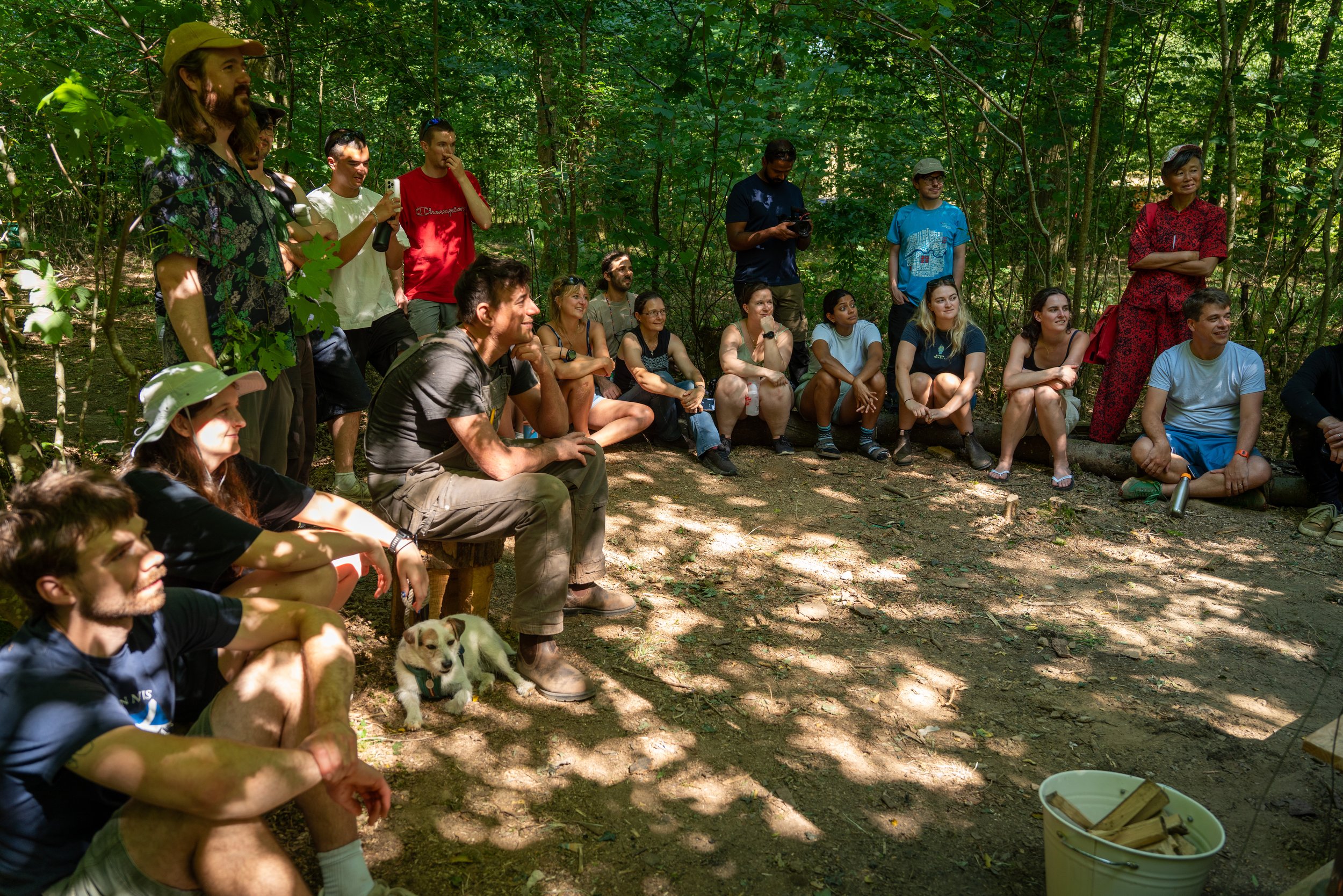
From 9-12 July 2026, 25 engineers from 18 Engineering Club member companies came together at Hazel Hill Wood in Wiltshire for the inaugural Engineers in the Woods residential design-and-build weekend. It was the first event of its kind ever organised by The Engineering Club and the first time a workshop of this nature had been run specifically for engineers at Hazel Hill Wood.
Set within the Hazel Hill Trust's 70-acre conservation woodland, the four-day event brought together engineers from across the industry to collaborate, learn new skills, and leave a lasting legacy for the woodland and its visitors.
Design Through Making
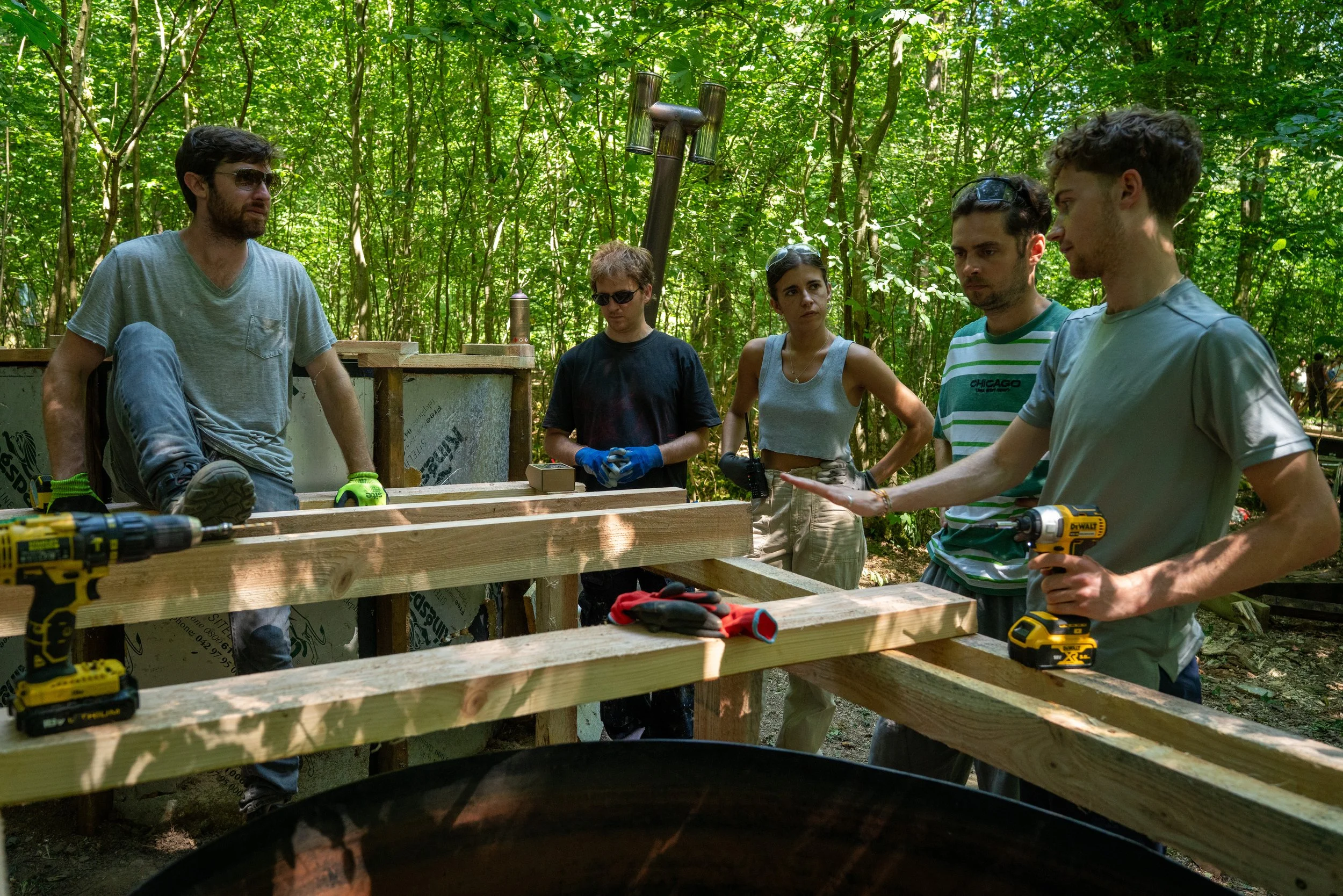
Unlike a traditional engineering project, Engineers in the Woods challenged participants to step away from detailed calculations, drawings and computer models, and instead work directly with materials, tools and the landscape itself.
Working in three self-governing project teams, participants were tasked with designing and constructing structures that would support Hazel Hill Trust's conservation, wellbeing and educational activities. Many attendees described it as a rare opportunity to reconnect with the physical side of engineering, learning through making and allowing designs to evolve in response to materials, site conditions and group creativity.
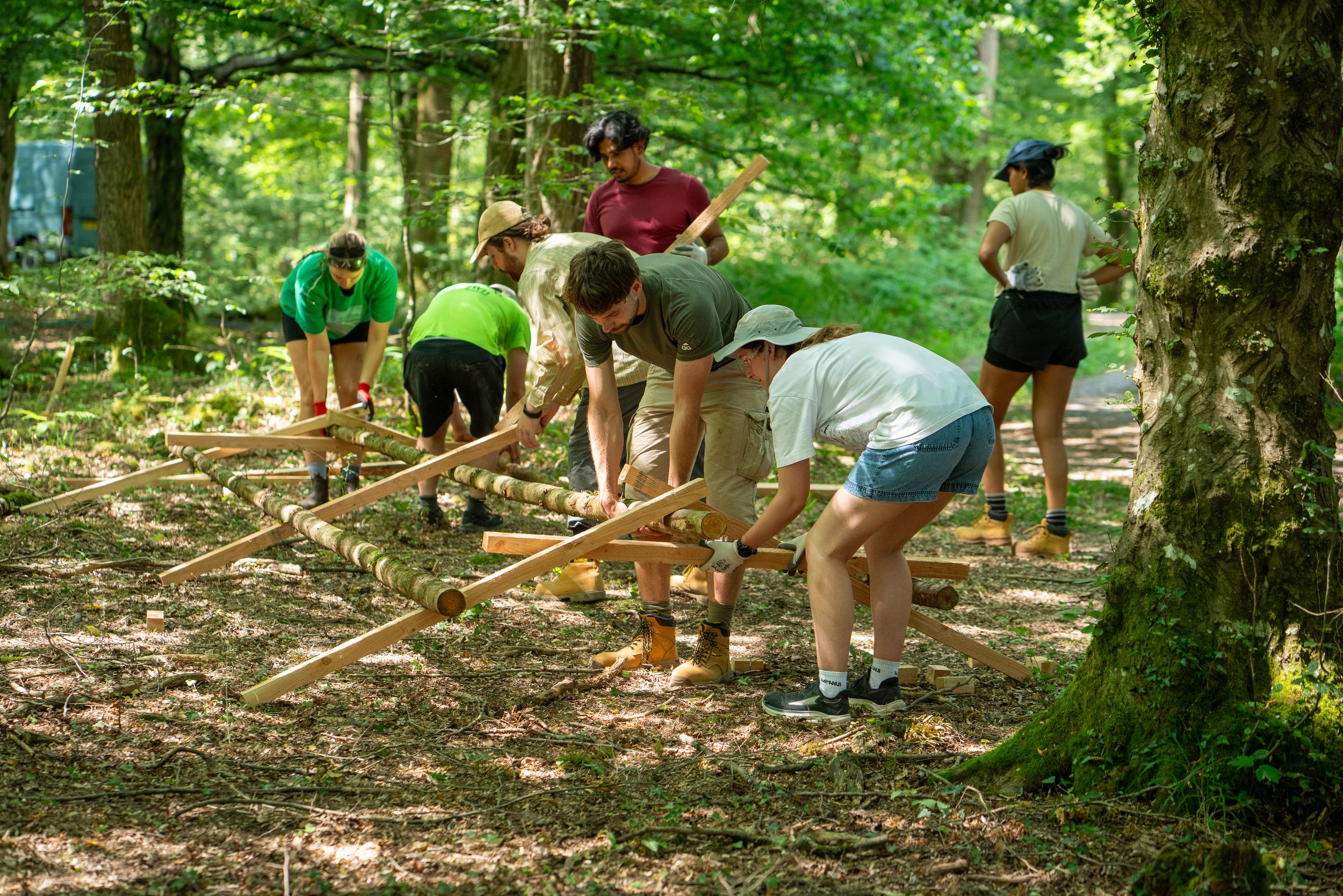
The majority of the timber used throughout the weekend came directly from Hazel Hill Wood itself. Teams worked with Douglas fir trees that had been felled just three weeks earlier, alongside reclaimed and repurposed timber sourced from around the woodland. Participants were involved in every stage of the process, from handling raw timber through to fabrication and construction.
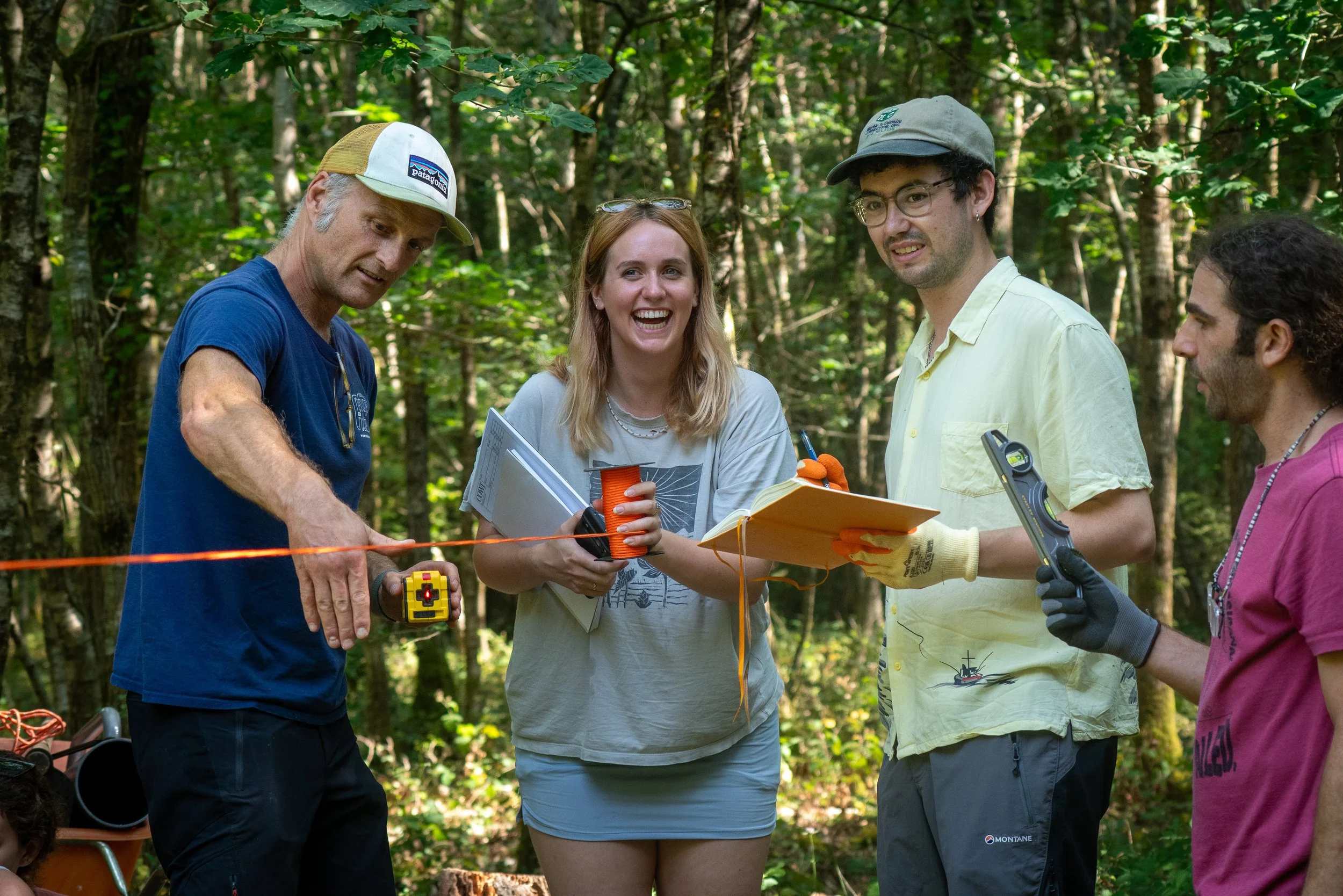
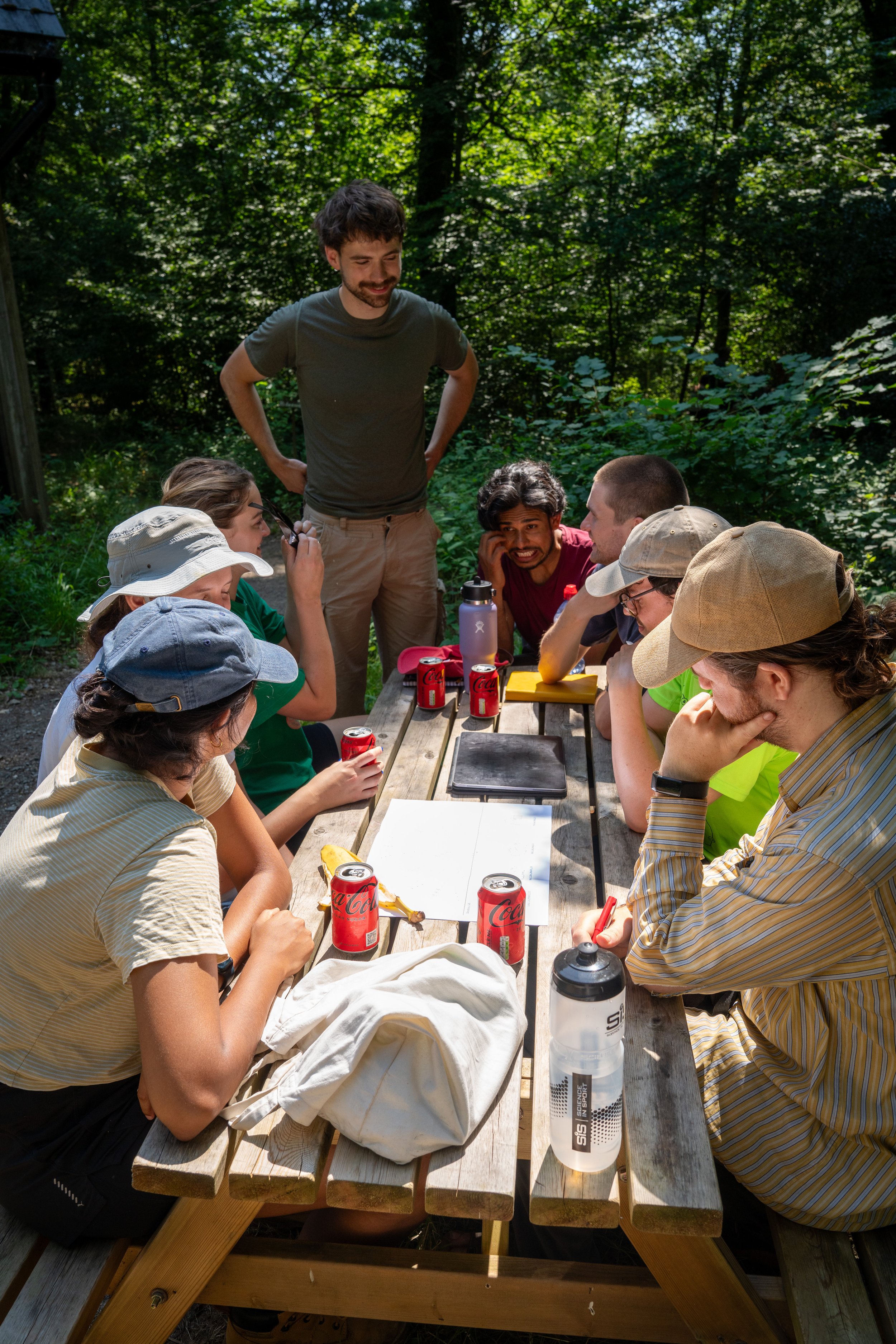
Team Pond: Creating Access Without Disturbance
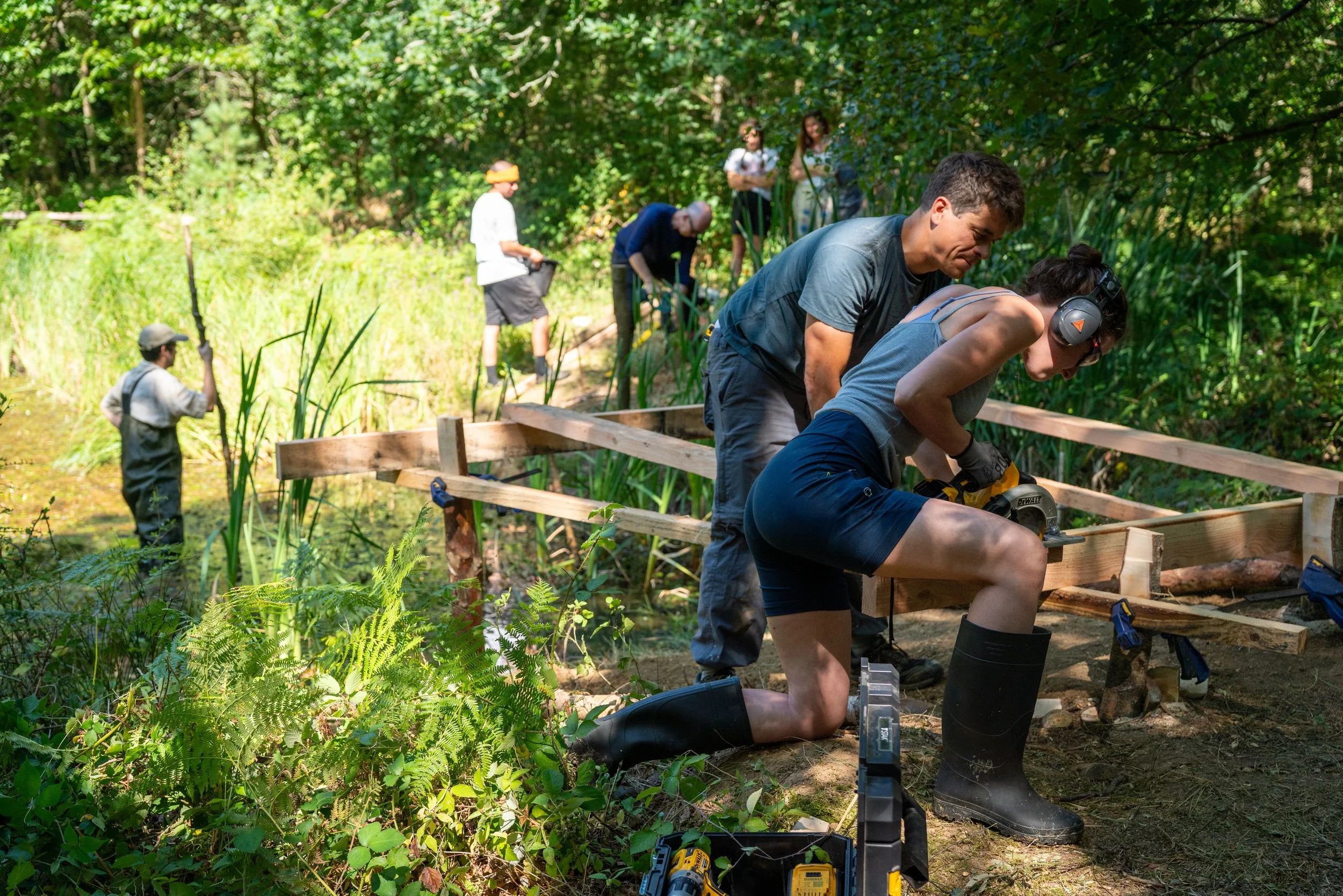
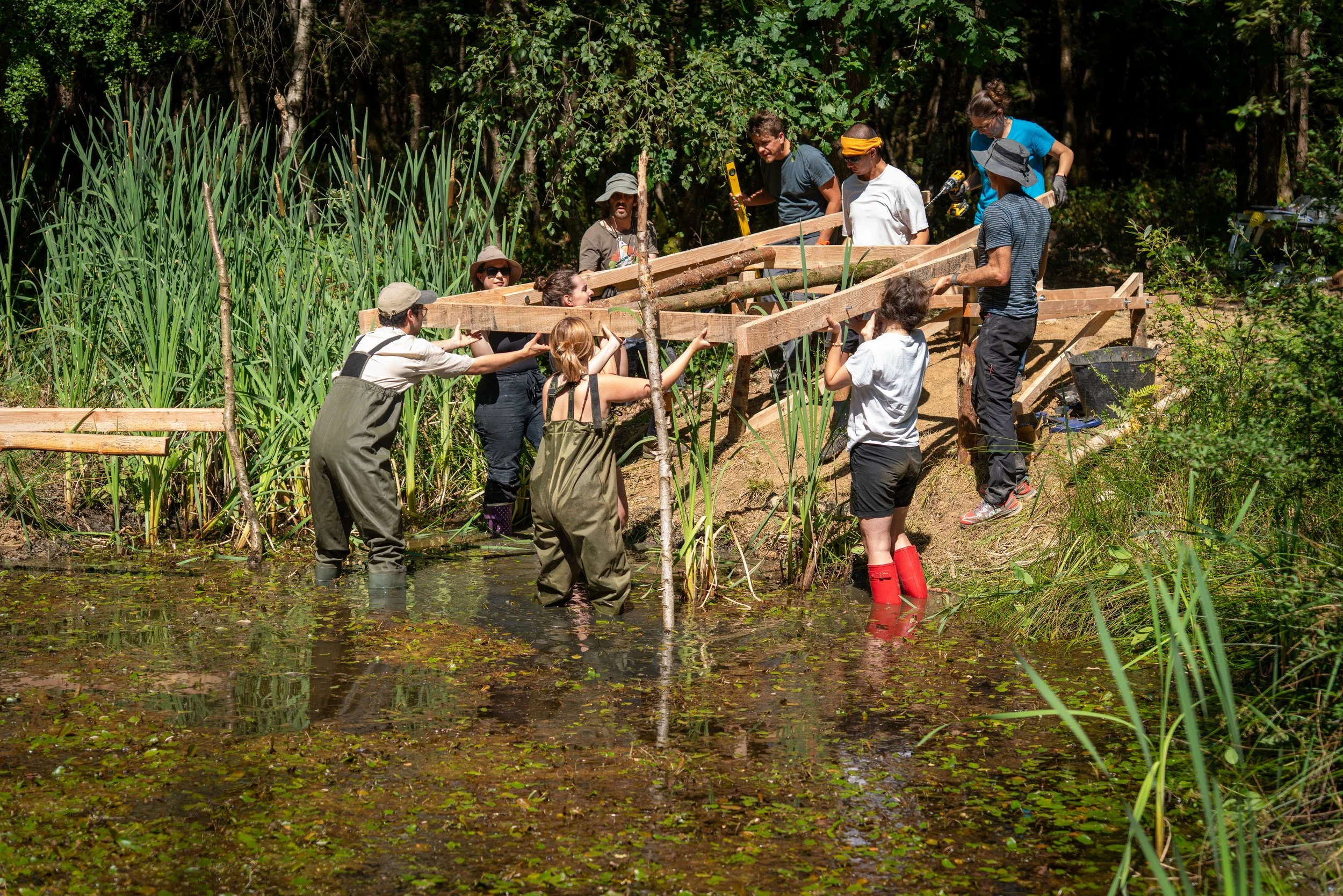
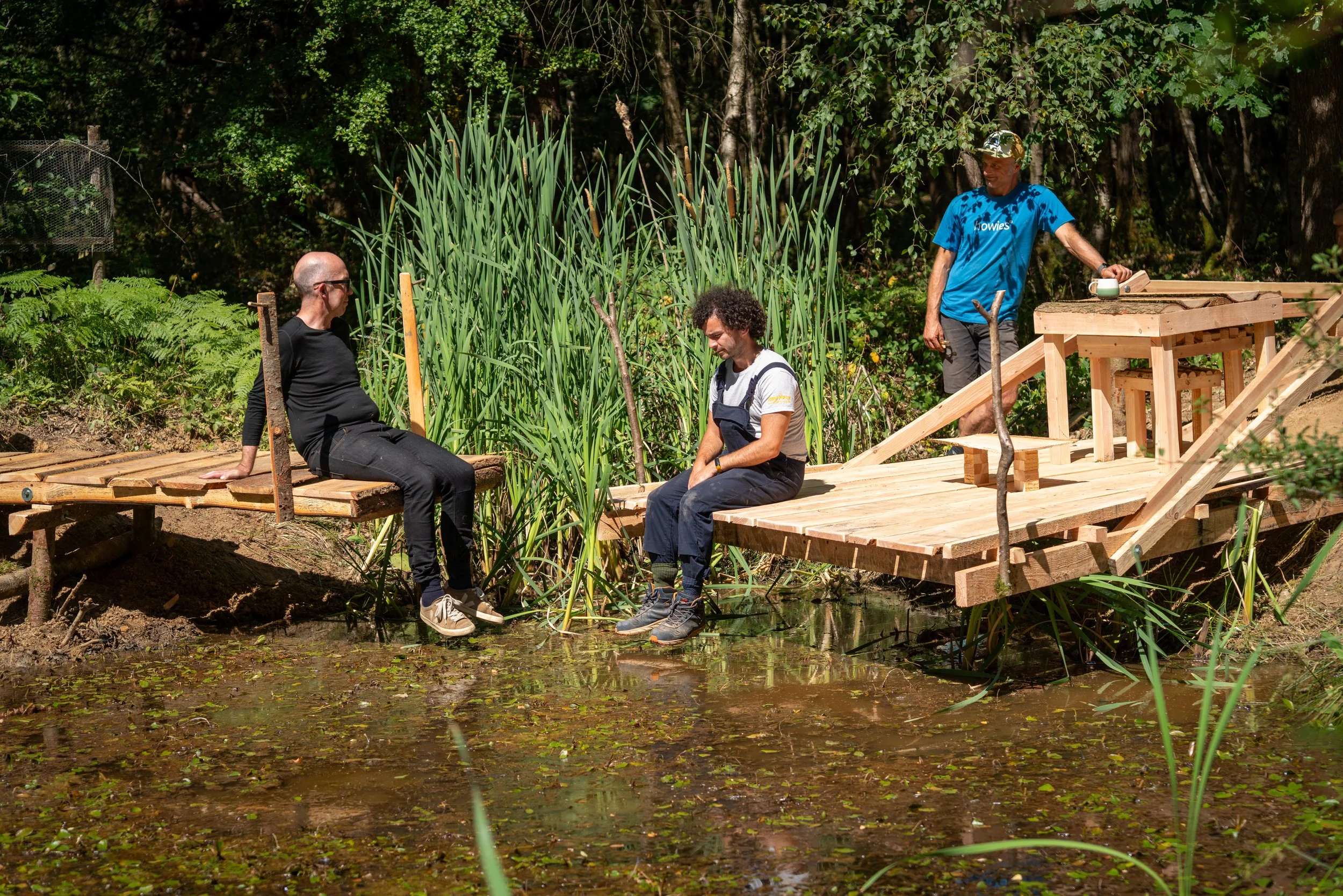
One team was tasked with improving access to a pond frequently used for educational activities, wildlife observation and pond dipping.
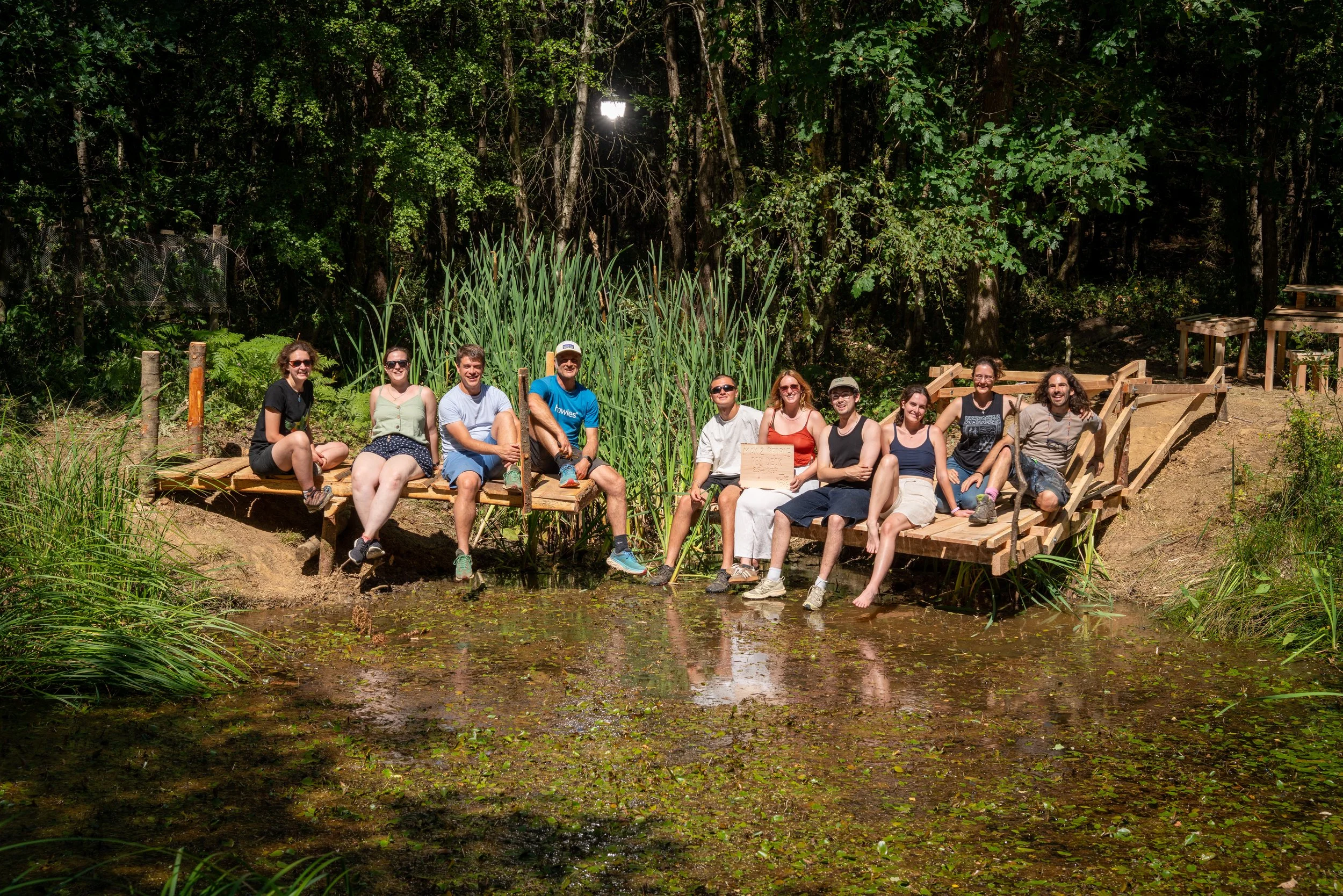
The challenge was to bring visitors closer to the water while protecting the sensitive pond habitat and avoiding disturbance to the clay lining and surrounding ecology. The team responded by creating a series of timber platforms that cantilever out above the water, supported by manually driven timber piles located away from the pond edge.
A small bridge was also constructed across the winterbourne that feeds the pond, creating safe access routes and allowing children and visitors to engage more closely with the woodland's wildlife. The completed structures provide a practical and sustainable solution that balances accessibility with conservation.
Team Community: Reimagining a Timber Store
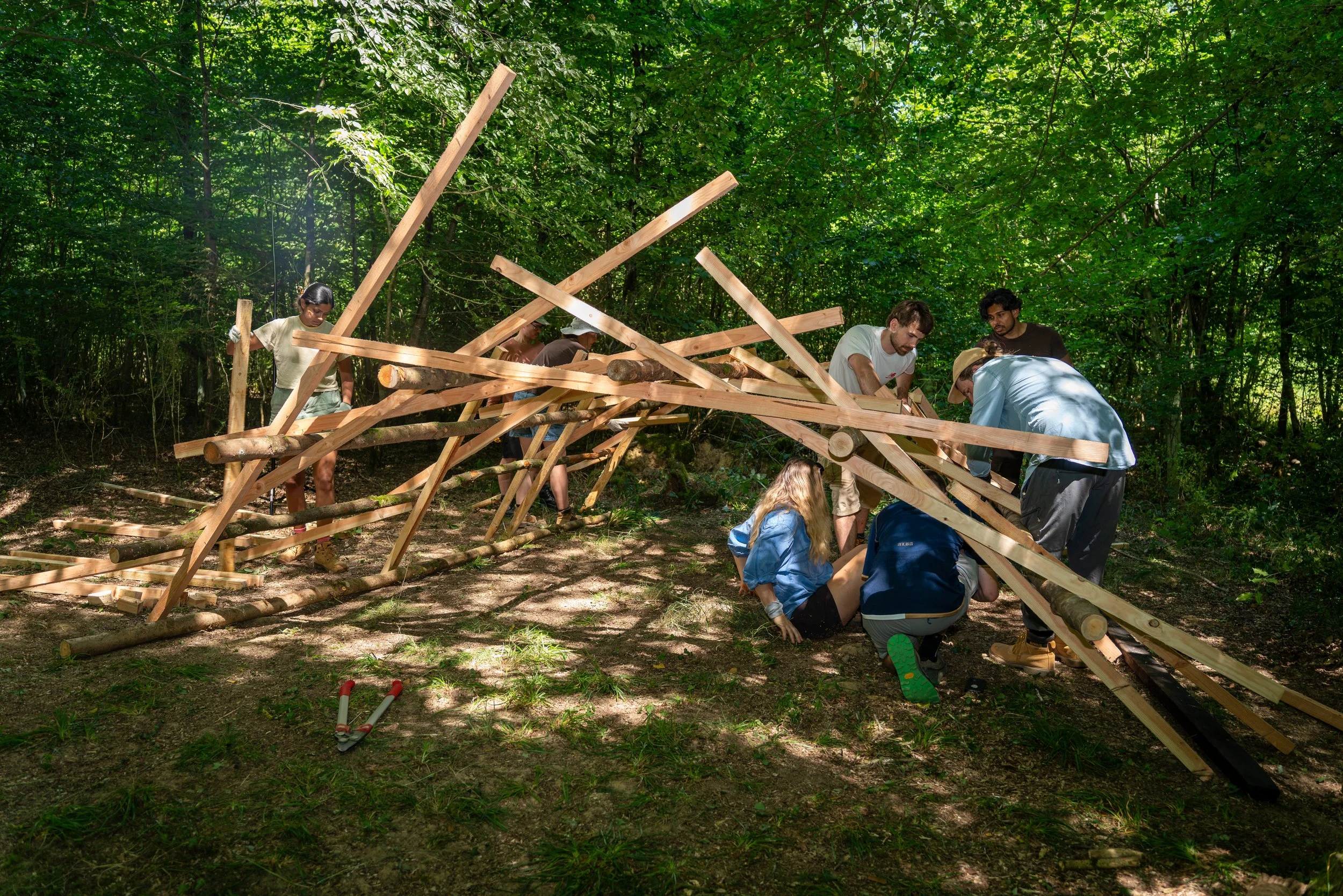
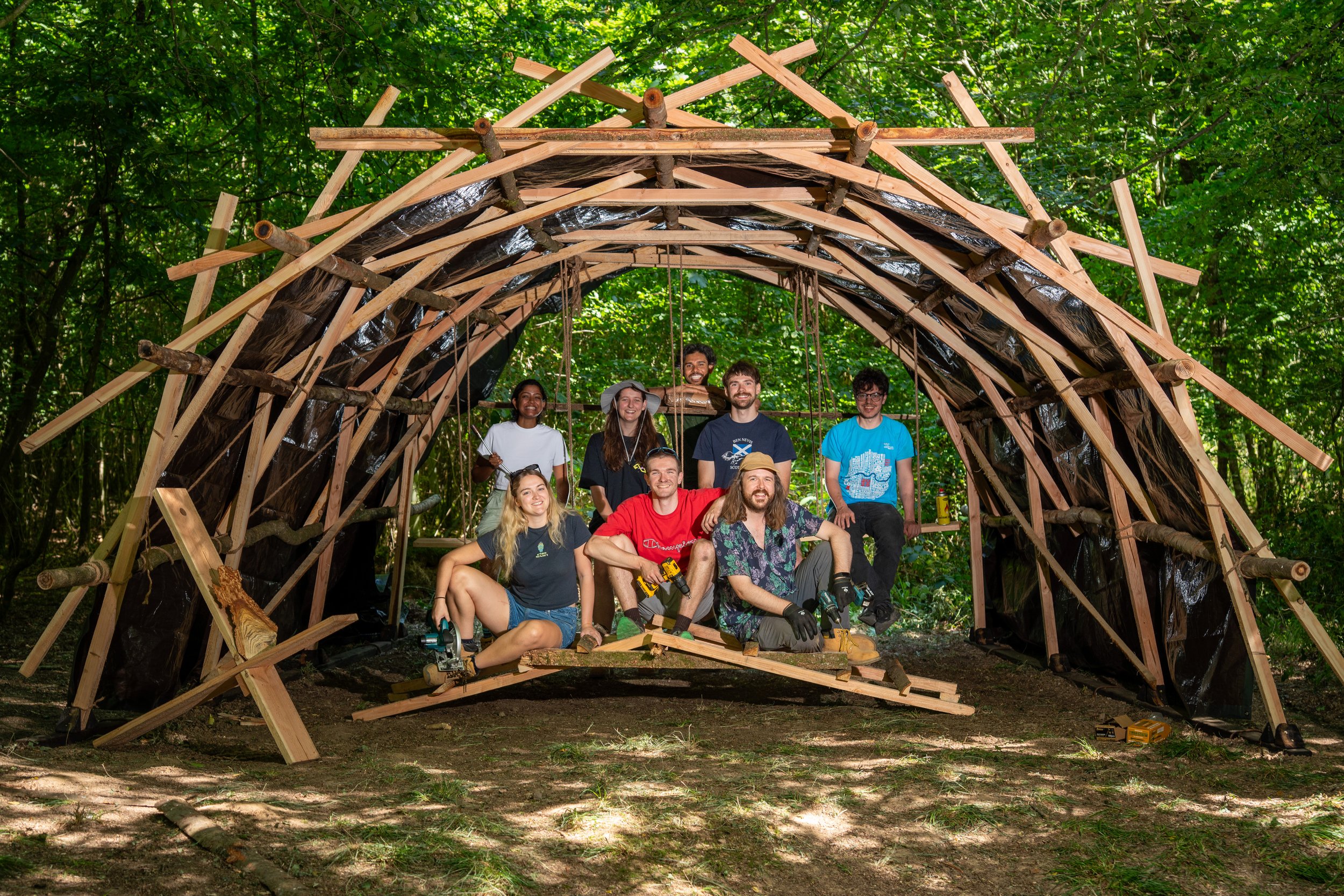
A second team was asked to create a structure which could be used by the community. The brief evolved as the team learnt more about the needs of the woodland; specifically, the need for a large shelter for storing timber sections milled on site.
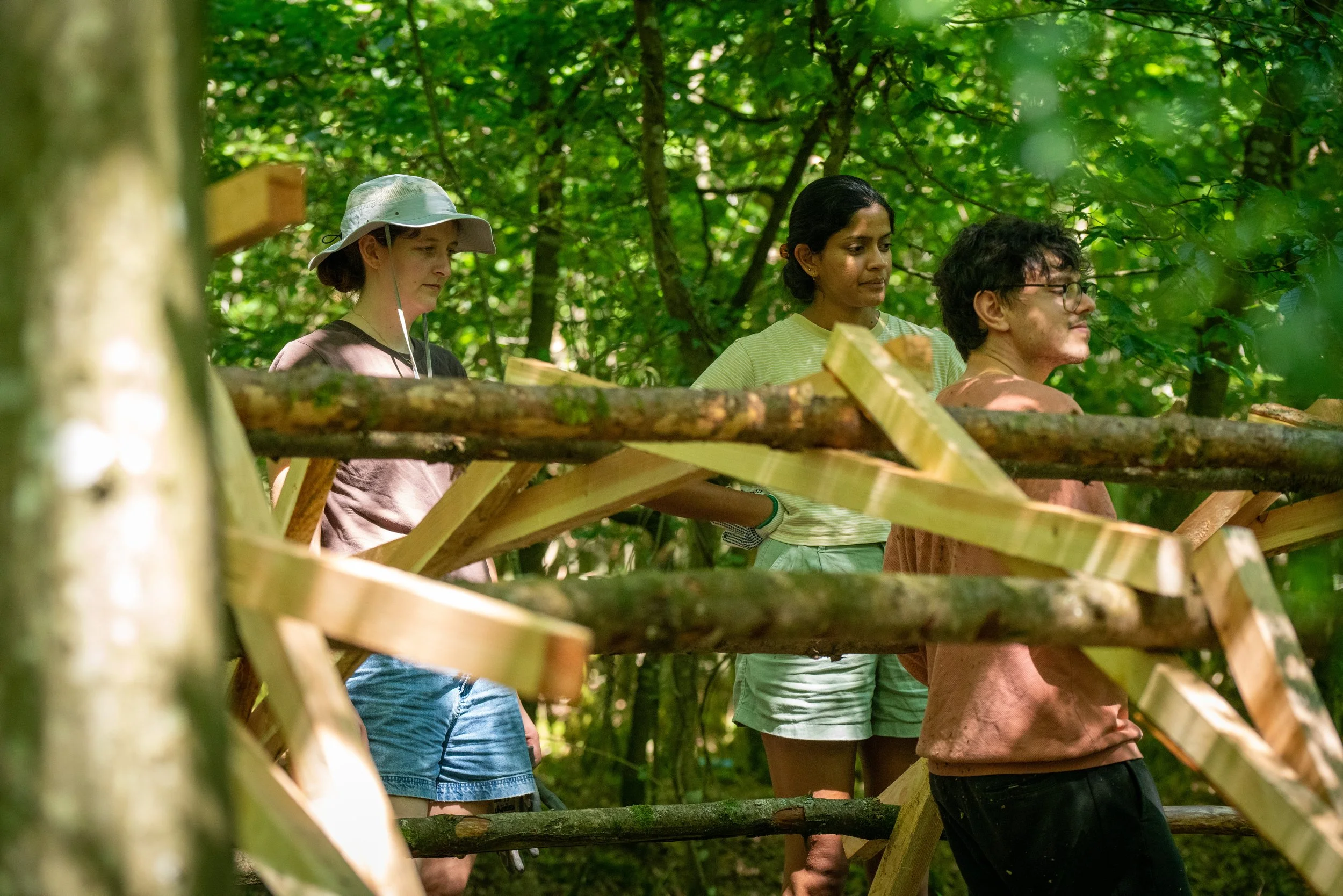
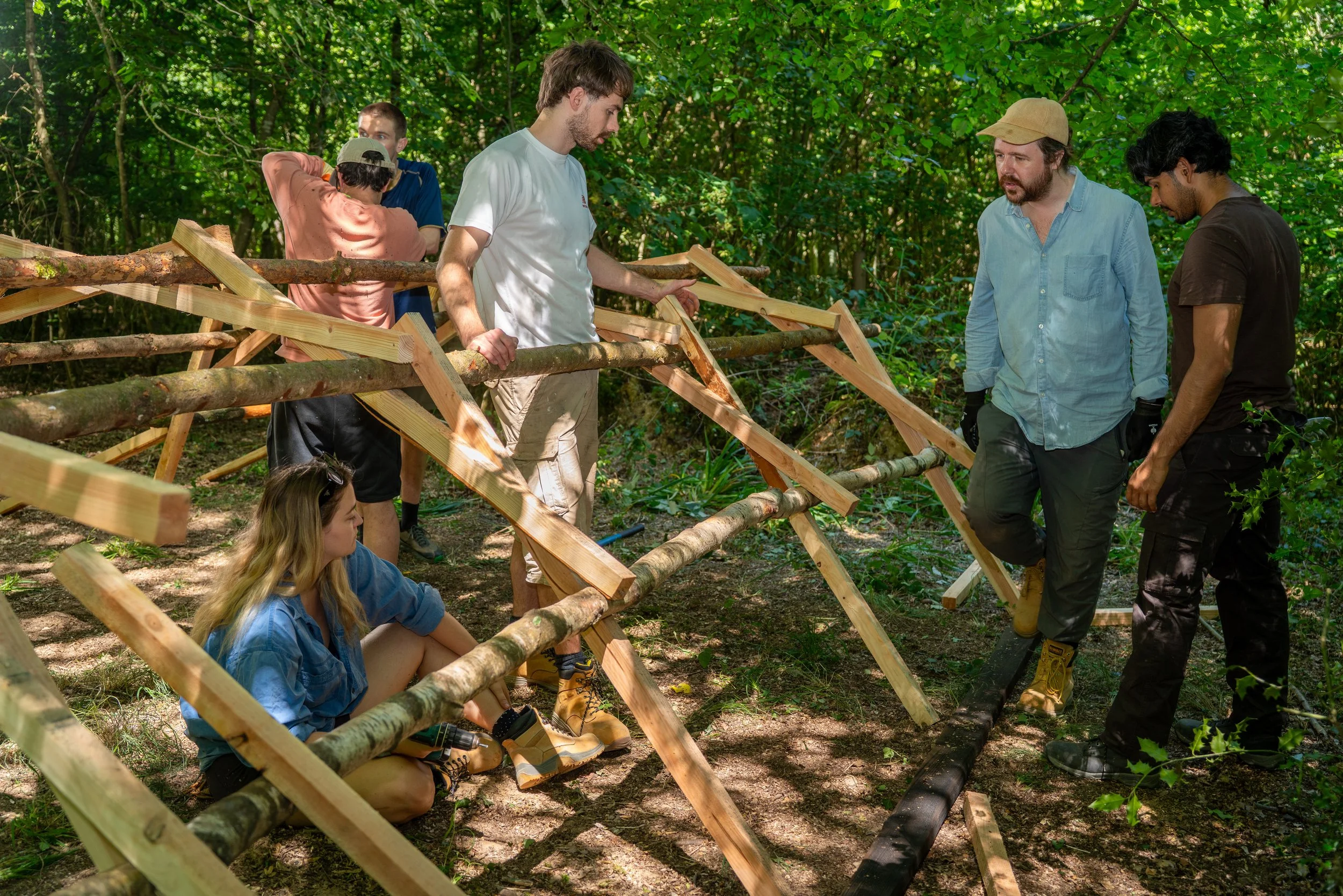
Drawing inspiration from Leonardo da Vinci's self-supporting bridge concept, the team developed an elegant timber arch structure that relies on geometry, friction and gravity to achieve stability. As the build progressed, the design evolved in response to the natural shape and characteristics of the round timber available.
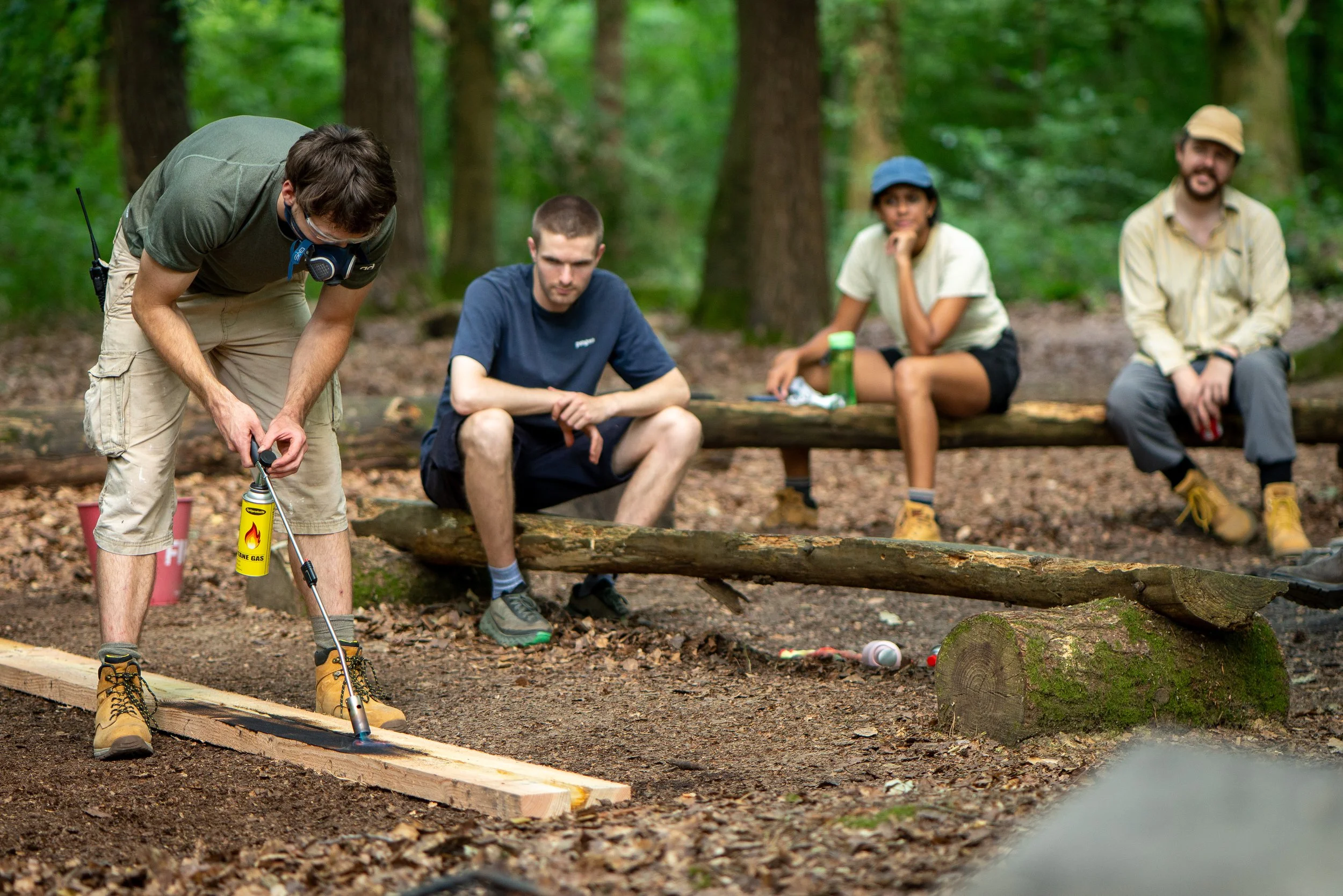
The final structure incorporates a tapered form, rope bracing and carefully detailed connections to improve stability and durability. Ground-contact timber elements were charred using traditional methods to improve longevity, while the construction sequence was developed so the structure could be assembled without requiring work at height.
What began as a simple timber store became a fascinating exercise in collaborative problem-solving, material understanding and experimental design.
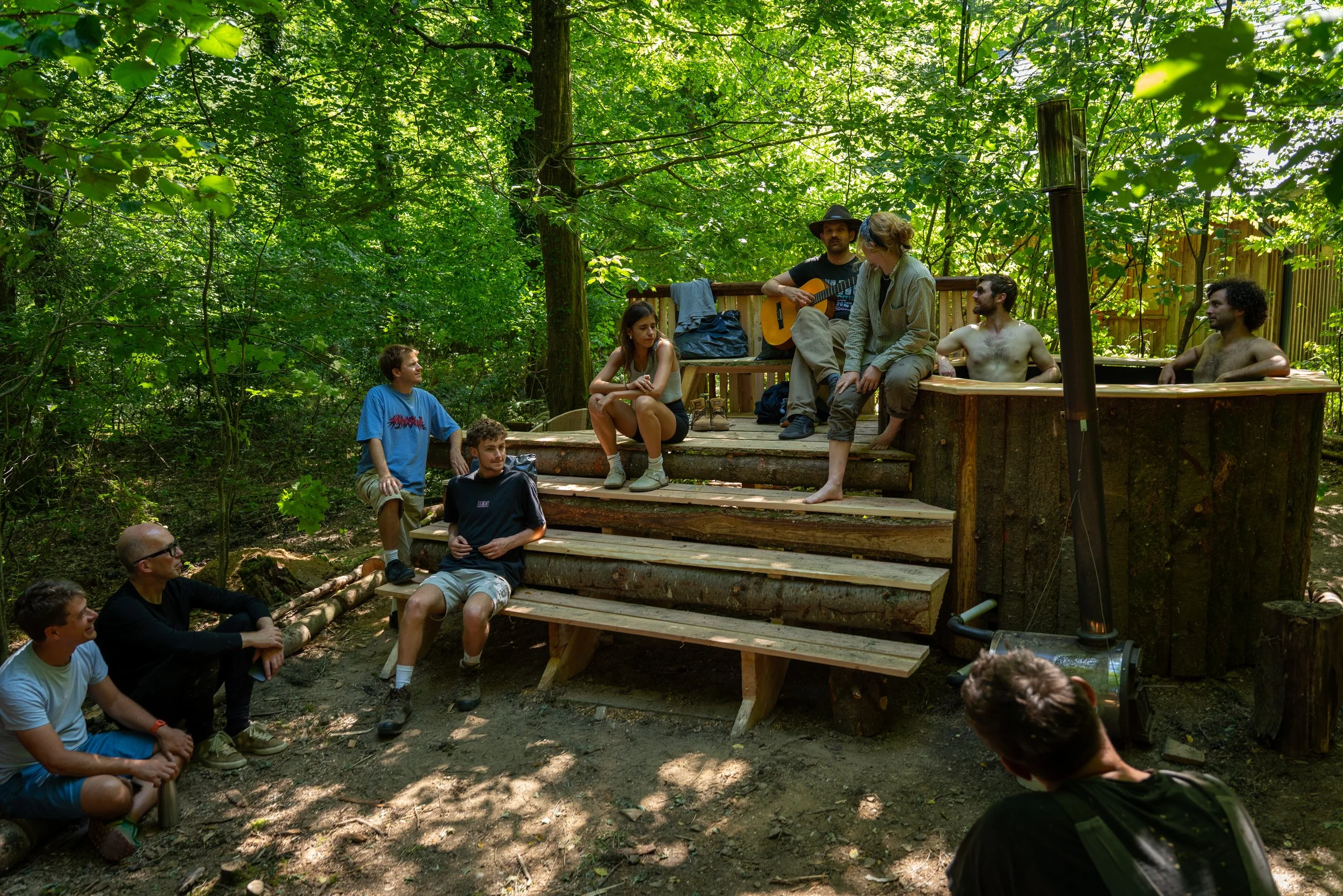
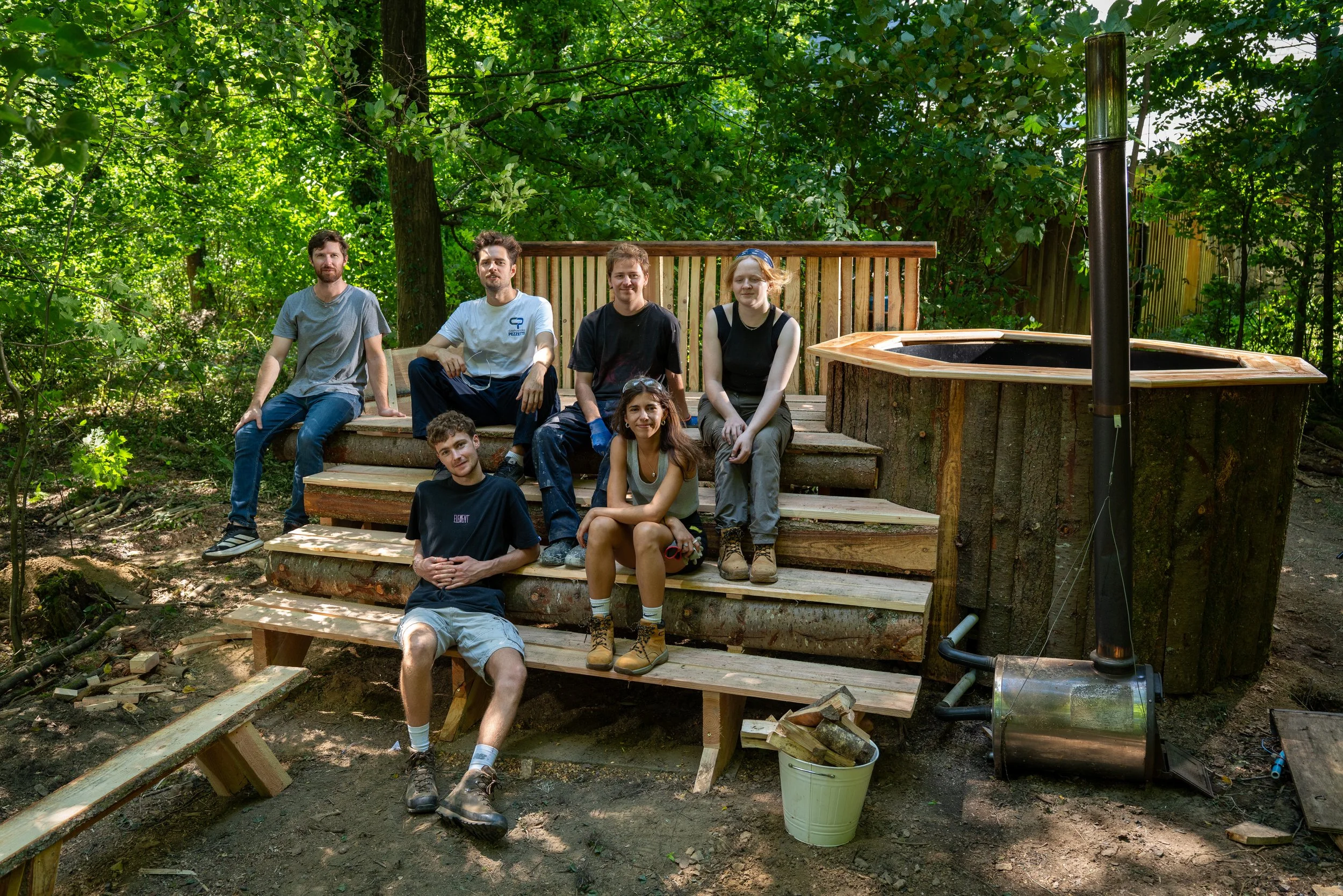
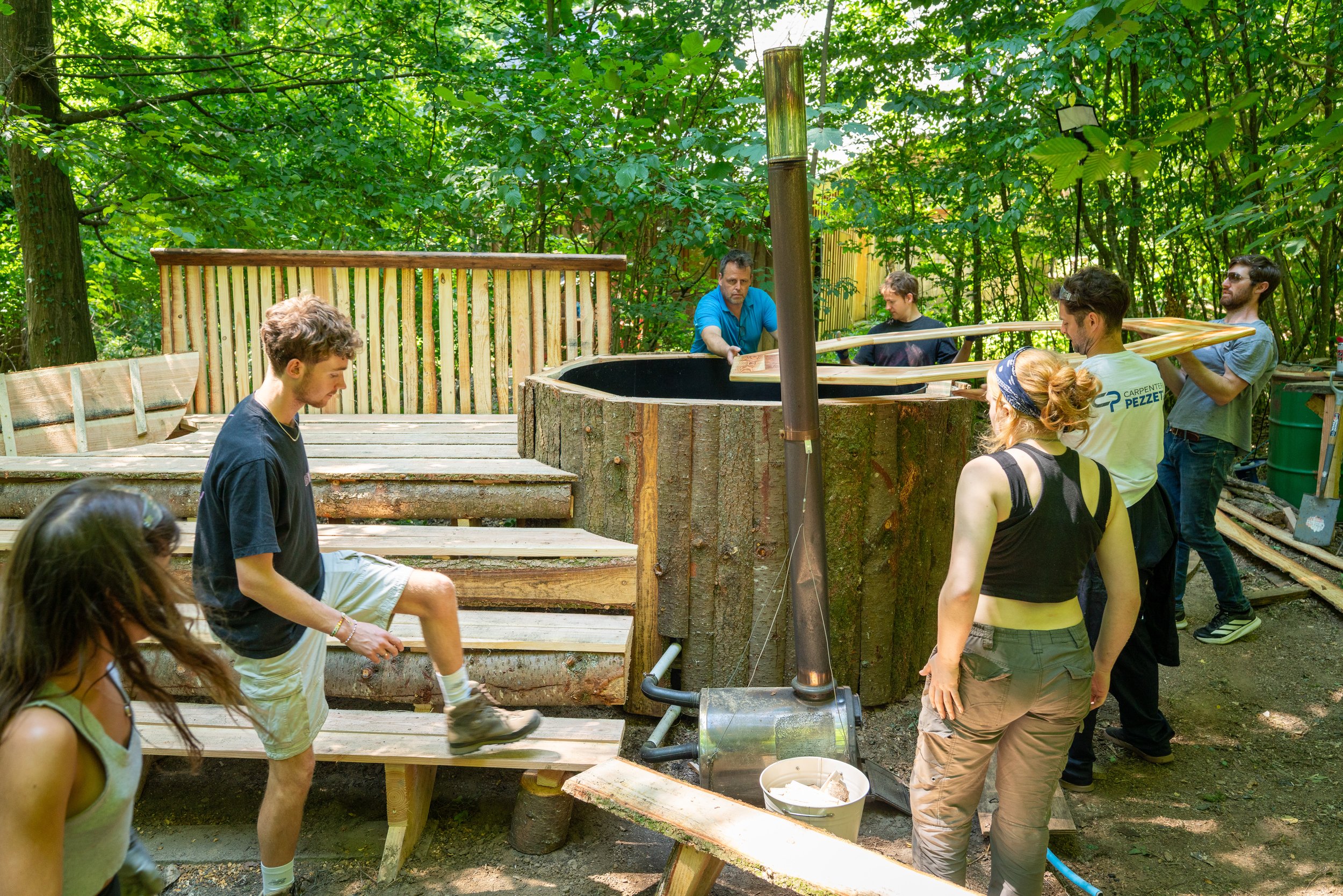
Team Spa: Breathing New Life into a Forgotten Space
The third team focused on an area of the accommodation grounds that had fallen into disrepair and contained the remnants of an old wood-fired hot tub.
Over the course of the weekend, the team transformed the space into a new woodland wellness area centred around a refurbished hot tub and cold plunge pool. Using timber harvested from the woodland, they constructed a raised deck, amphitheatre-style seating and supporting structures that could be used for talks, performances and community activities.
The project showcased how engineering, architecture and craftsmanship can work together to rejuvenate existing assets. By the end of the weekend, what had once been a neglected corner of the site had become a vibrant, attractive and welcoming functional space.
More Than Just Building Structures
While the physical structures were impressive, many participants described the greatest success of the weekend as the collaboration it fostered.
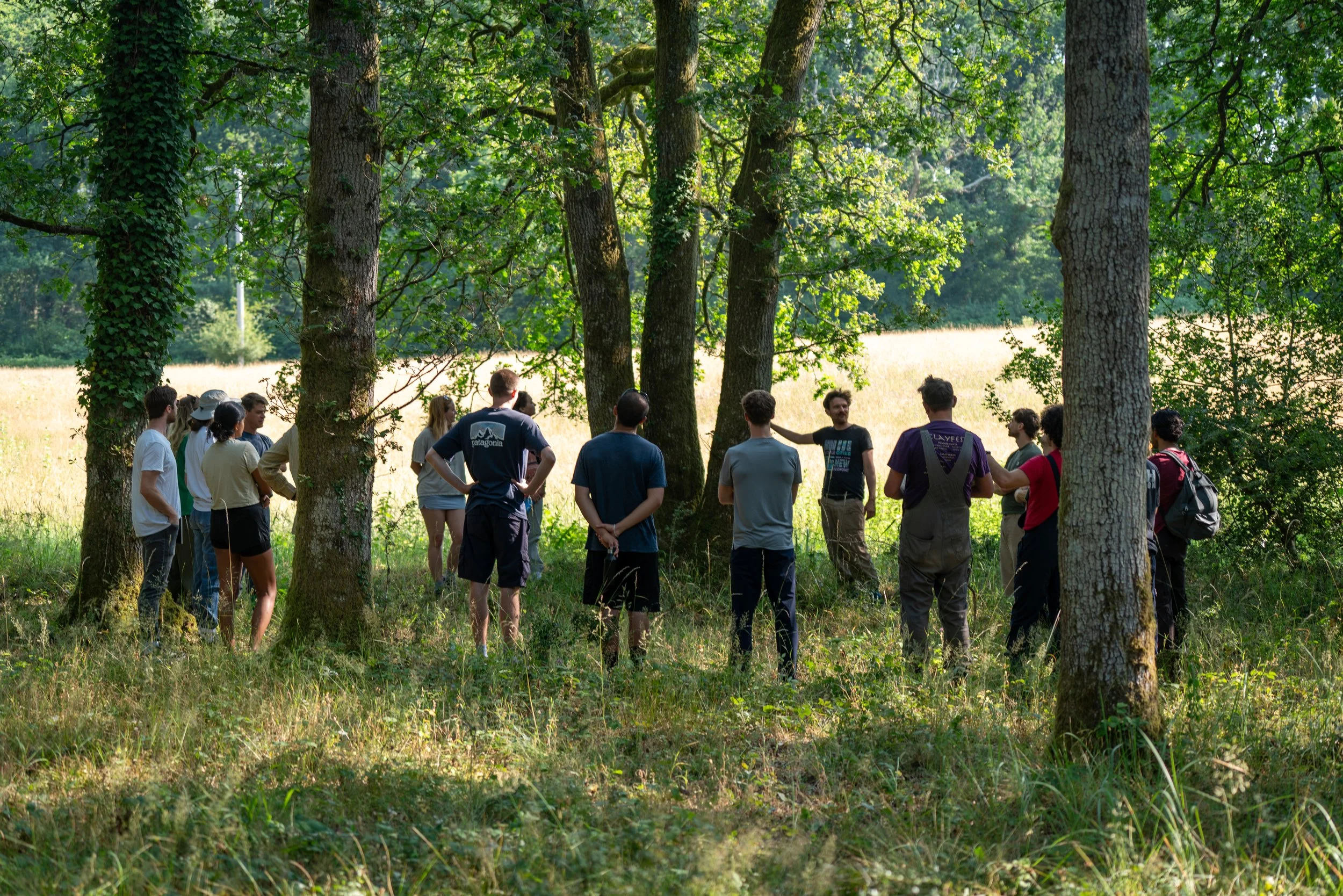
Engineers from a range of different companies worked side-by-side, sharing knowledge, testing ideas and learning from one another. The event created opportunities for participants at all career stages to develop practical skills, exchange perspectives and build new professional relationships.
The weekend was facilitated by Oliver Broadbent of Constructivist and supported by the Hazel Hill Trust team, alongside Engineering Club volunteers and mentors. Participants also benefited from design reviews and critiques throughout the build process, helping each project evolve while maintaining a strong focus on purpose, usability and sustainability.
A Lasting Legacy
Engineers in the Woods was conceived as more than a volunteering weekend. It was an opportunity to explore regenerative thinking, circular design principles and the role engineers can play in creating positive environmental and social outcomes.
By Sunday afternoon, three very different projects had been delivered, each providing a lasting benefit to Hazel Hill Wood and the many visitors who use it for conservation, wellbeing and educational activities.
Most importantly, the weekend demonstrated what can happen when talented engineers are given the freedom to create, collaborate and build together in an inspiring setting.
Following the success of this inaugural event, The Engineering Club hopes that Engineers in the Woods will become a regular fixture in the calendar and continue creating opportunities for engineers to reconnect with materials, nature and each other.